
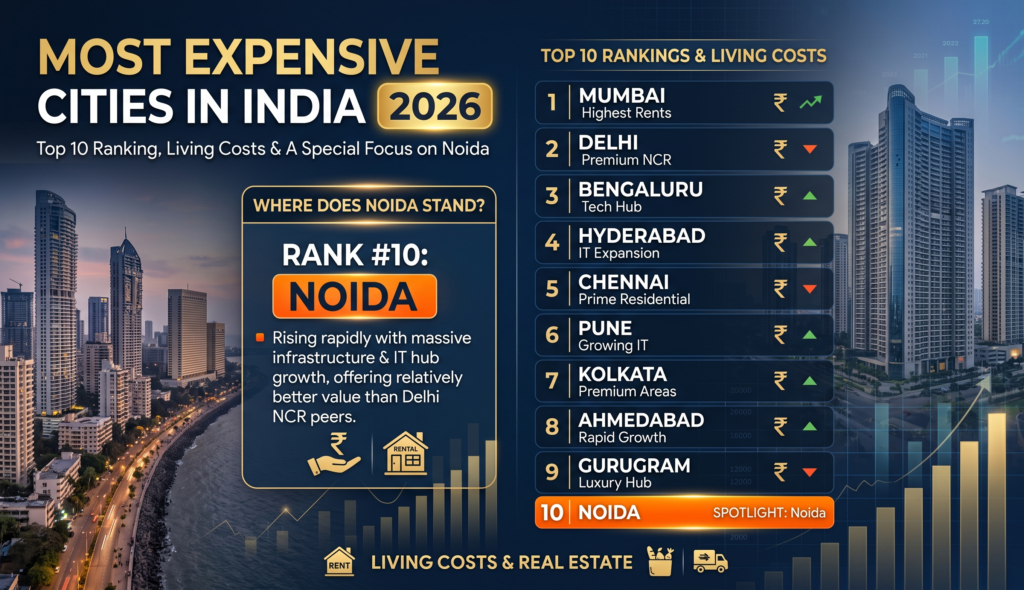
Mumbai is the most expensive city in India in 2026, with the highest cost of living index (25.8) and rent index (17.5) on Numbeo. Gurgaon ranks second, ahead of Delhi. On property prices, though, Noida is the city to watch: a Sector 16B project recently sold at ₹37,000 per sq ft, the highest residential rate Noida has ever recorded.
Key Takeaways
- Mumbai is the costliest city in India in 2026 for everyday living and rent.
- Gurgaon is No. 2 and roughly 12.5% more expensive than Delhi.
- Noida ranks sixth on cost of living but is rising sharply on real estate prices.
- Noida’s price range is wide: about ₹13,350 per sq ft in Sector 150, ₹37,000 per sq ft at a record Sector 16B sale, and plots listed up to ₹57,000 per sq ft in Sector 44.
- Even Mumbai sits outside the world’s 400 most expensive cities, so Indian metros stay affordable by global standards.
Two Questions Hiding Inside One Search
When you type “most expensive city in India” into Google, you’re usually asking one of two things. How much will it cost me to live there each month? Or how much will a home there cost me to buy?
Most rankings mix the two together. That’s how Noida, a city that just set its own price record, keeps getting left off lists that are really about property.
So we’ve kept them apart. The ranking below uses cost of living. The locality prices sit alongside it, clearly labelled, so you always know which number you’re reading.
How We Built This Ranking
The cost of living order comes from Numbeo’s 2026 city index, which tracks groceries, transport, utilities and rent. Statista uses the same data for its India comparisons.
Property figures come from separately reported transactions and locality averages. They’re snapshots of specific neighbourhoods, not city-wide averages, so use them to understand direction and scale rather than as exact comparisons.
Top 10 Most Expensive Cities in India (2026)
| Rank | City | Cost of Living Index | Rent Index | Monthly Spend, Single Person (excl. rent) |
|---|---|---|---|---|
| 1 | Mumbai | 25.8 | 17.5 | ₹30,000 to ₹60,000 |
| 2 | Gurgaon | No. 2 nationally | n/a | About 12.5% above Delhi |
| 3 | Delhi | 22.5 | 7.1 | ₹22,000 to ₹50,000 |
| 4 | Pune | 22.4 | 6.6 | ₹25,000 to ₹45,000 |
| 5 | Bangalore | 21.5 | 8.5 | ₹20,000 to ₹50,000 |
| 6 | Noida | Global rank 458 | n/a | n/a |
| 7 | Hyderabad | 21.1 | 5.6 | ₹12,000 to ₹50,000 |
| 8 | Ahmedabad | Global rank 461 | n/a | ₹50,000 to ₹85,000 (family) |
| 9 | Chennai | 20.0 | 4.4 | ₹15,000 to ₹50,000 |
| 10 | Kolkata | 19.3 | 3.8 | ₹20,000 to ₹40,000 |
1. Mumbai: India’s Costliest City
Mumbai tops the list because it has the highest living costs, the steepest rents and very little land left to build on. A single working professional spends ₹30,000 to ₹60,000 a month before rent, according to Numbeo’s Mumbai profile.
Property is where the gap really shows. Malabar Hill averages about ₹59,275 per sq ft, one of the highest residential rates anywhere in the country.
2. Gurgaon: No. 2 and Ahead of the Capital
Numbeo’s city comparison puts Gurgaon about 12.5% costlier than Delhi. The reason is simple: a dense corporate base, strong demand from global capability centres (GCCs) and premium corridors like Golf Course Road.
City-wide, homes typically sell for ₹9,000 to ₹14,000 per sq ft. Golf Course Road can go past ₹34,000.
3. Delhi: Cheaper Overall, Extreme at the Top
Delhi trails Gurgaon mainly because its average rents are lower. A single professional spends roughly ₹33,700 a month on Numbeo’s comparison.
The city average hides a lot, though. Jor Bagh runs at about ₹55,660 per sq ft, and bungalows in Lutyens’ Delhi have changed hands for more than ₹1,100 crore this year. Scarcity value in Delhi sits in a few central pockets.
4. Pune: Salaries Pulled Costs Up
Pune’s numbers look close to Delhi’s, but the cause is different. IT wages rose, and living costs followed. Koregaon Park, the city’s premium address, averages around ₹12,569 per sq ft. Rent pressure is much milder than in Mumbai.
5. Bangalore: Your Corridor Decides Your Bill
The ₹20,000 to ₹50,000 monthly range tells you most of the story. Where you live inside Bangalore matters a lot. Koramangala sits near ₹11,412 per sq ft, while Whitefield and Electronic City are priced quite differently.
6. Noida: The City Most Lists Miss
This is the one we watch most closely at Prateek Properties, and it’s the biggest blind spot in standard rankings.
In 2026, Max Estates’ Max One in Sector 16B sold at ₹37,000 per sq ft, the highest residential rate in Noida’s history. That’s around four to six times the general rate in that part of the city.
The spread across Noida is wide:
- Sector 16B: ₹37,000 per sq ft (record luxury sale)
- Sector 44: premium plots listed up to ₹57,000 per sq ft
- Sector 150: about ₹13,350 per sq ft on average
A single “Delhi NCR” figure flattens all of this. If you’re buying in Noida, the sector you pick changes your budget more than the city does.
7. Hyderabad: Your Salary Goes Further
Hyderabad’s costs are lower relative to what people earn here, so purchasing power holds up well. Monthly spends range widely, ₹12,000 to ₹50,000 per reported data. Jubilee Hills averages about ₹12,544 per sq ft, and you can still find far cheaper pockets close to the IT corridor.
8. Ahmedabad: GIFT City Is Changing the Math
A family in Ahmedabad now spends ₹50,000 to ₹85,000 a month, well above a decade ago. Manufacturing, textiles and IT all play a part. GIFT City’s fintech growth is pulling fresh corporate demand into Satellite and Thaltej, and that’s likely to keep prices moving up.
9. Chennai: Coastal Addresses Carry the Premium
Most of Chennai stays moderately priced. The coast doesn’t. Besant Nagar averages around ₹15,968 per sq ft, clearly above Adyar and Anna Nagar. That gap between the coastal belt and the rest of the city is one of the widest on this list.
10. Kolkata: Cheapest Metro, With One Exception
Kolkata has the lowest monthly costs of any metro here, ₹20,000 to ₹40,000 for a single professional. Yet Park Street averages about ₹27,758 per sq ft. Low daily expenses and a sharply priced premium address can exist in the same city.
Most Expensive Localities in India’s Top Cities
| City | Priciest Locality | Approx. Price per sq ft |
|---|---|---|
| Mumbai | Malabar Hill | ₹59,275 |
| Noida | Sector 44 (plots) | Up to ₹57,000 |
| Delhi | Jor Bagh | ₹55,660 |
| Gurgaon | Golf Course Road | ₹34,000+ |
| Kolkata | Park Street | ₹27,758 |
| Chennai | Besant Nagar | ₹15,968 |
| Pune | Koregaon Park | ₹12,569 |
| Hyderabad | Jubilee Hills | ₹12,544 |
| Bangalore | Koramangala | ₹11,412 |
How India Compares With the World
Mumbai’s index of 25.8 is about a fifth of Zurich’s 125.5, the highest on Numbeo’s global list. Geneva follows at 110.8. Hundreds of cities in the US, Europe, Australia and Asia score higher than any Indian city.
Two things explain the gap: lower wages, even at the top end, and weaker purchasing power of the rupee abroad. India’s national cost of living index sits around 18 to 19, and cities like Coimbatore and Lucknow rank among the cheapest urban centres in the world.
So a city can top the domestic list and still be affordable by global standards.
Why Noida Deserves a Closer Look in 2026
At Prateek Properties, we get this question often: if Mumbai and Gurgaon are pricier, why is so much buyer interest moving to Noida?
A few reasons stand out.
Airport-led growth. Noida International Airport at Jewar is pulling demand along the Yamuna Expressway and the Noida Expressway belt, including Sector 150.
Room to grow. Sector 150 averages around ₹13,350 per sq ft, well below the city’s record luxury sale. That gap gives buyers an entry point that Golf Course Road or Malabar Hill simply don’t offer.
Proven top-end demand. A ₹37,000 per sq ft sale shows buyers will pay premium prices here. That tends to lift confidence across nearby micro-markets over time.
Planned layouts. Wide roads, large green areas and sector-based planning make daily life easier than in many older city centres.
That said, prices vary a lot by sector, builder and possession timeline. Check the RERA registration, compare carpet area rather than super built-up area, and ask about the expected possession date before you commit. Our team is happy to walk you through the numbers for any project.
Explore Prateek projects in Noida
Which City Gives You the Best Value?
It depends on what you want from the move.
- For long-term appreciation: Gurgaon and Noida. Gurgaon’s Golf Course Road has reportedly seen about 117% price growth since 2019, and Noida is catching up at the premium end.
- For growth at a lower entry price: Noida’s Expressway sectors and Ahmedabad’s GIFT City belt.
- For low day-to-day costs: Kolkata, with Hyderabad close behind if you’re in IT.
The most expensive city and the best place to buy are rarely the same.
What Comes Next
Expect this ranking to keep moving. Noida’s airport-linked growth and Gurgaon’s expanding office market should push both higher on real estate lists. Mid-tier metros like Kolkata will likely keep showing the same split: modest living costs alongside sharp price growth in a few premium pockets.
Frequently Asked Questions
1. Which is the most expensive city in India in 2026?
Mumbai. It has the highest cost of living index (25.8) and rent index (17.5) in India, per Numbeo. A single professional spends about ₹30,000 to ₹60,000 a month, not counting rent.
2. What are the top 10 most expensive cities in India?
By cost of living: Mumbai, Gurgaon, Delhi, Pune, Bangalore, Noida, Hyderabad, Ahmedabad, Chennai and Kolkata.
3. Which is the most expensive real estate city in India?
Mumbai, led by Malabar Hill at around ₹59,275 per sq ft. Delhi (Jor Bagh), Gurgaon (Golf Course Road) and Noida (Sector 44 plots and Sector 16B) also have localities well above ₹30,000 per sq ft.
4. What is the property price in Noida in 2026?
It depends heavily on the sector. Sector 150 averages about ₹13,350 per sq ft, a luxury project in Sector 16B sold at a record ₹37,000 per sq ft, and premium plots in Sector 44 have been listed up to ₹57,000 per sq ft.
5. Is Noida more expensive than Delhi?
Not on overall cost of living; Delhi ranks higher. On property, Noida’s top sectors now compete with many Delhi neighbourhoods, though central Delhi addresses like Jor Bagh remain pricier.
6. How much does it cost to live in India in 2026?
For a single professional, monthly costs excluding rent range from about ₹12,000 in cheaper parts of Hyderabad to ₹60,000 in central Mumbai. Rent typically adds 30% to 50% more in major metros.
7. Which is the cheapest city to live in India?
Kolkata is the most affordable major metro on Numbeo’s index. Beyond the metros, Coimbatore and Lucknow are among the cheapest cities in the world.
Disclaimer: Prices and indices are based on publicly reported data as of September 2026 and may change. Please verify details independently and consult a qualified advisor before making any property or investment decision.